

 January 8, 2026
Why Indian Game Studios Are Shifting Away from Real-Money Models?
Introduction
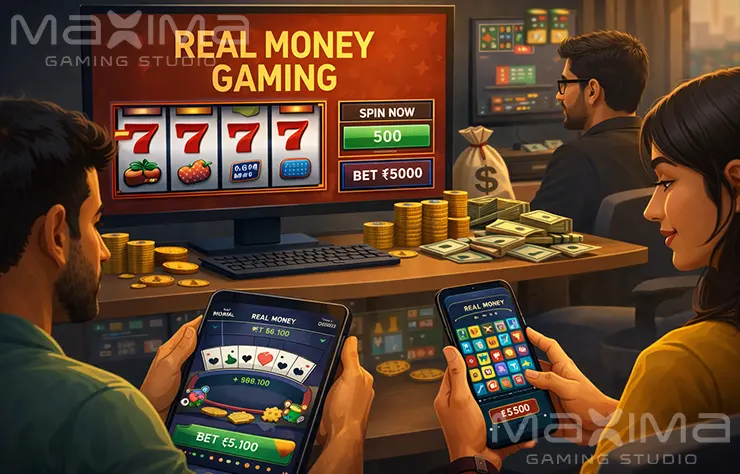
For years, real-money gaming (RMG) models—such as fantasy sports, card games, and betting-style mechanics—dominated headlines in India’s gaming space. While these models brought quick revenue, many Indian game studios are now reconsidering and moving away from real-money formats.
In 2025 and beyond, a noticeable shift is happening toward skill-based, ad-supported, subscription, and cosmetic monetization models. This change isn’t accidental—it’s driven by regulation, player trust, long-term sustainability, and global ambition.
Let’s explore why Indian game studios are pivoting away from real-money models and what this means for the future of gaming in India.
Regulatory Uncertainty and Compliance Risks
One of the biggest reasons for the shift is regulatory instability.
- State-wise laws differ across India
- Frequent policy changes create uncertainty
- Compliance costs are rising
- Legal challenges can halt operations overnight
Studios prefer predictable business models that allow steady growth without constant legal risk.
Player Trust and Brand Reputation
Real-money models often face trust issues among players.
- Fear of financial loss
- Suspicion of unfair outcomes
- Perception of gambling addiction
- Negative social stigma
Studios aiming to build long-term brands are prioritizing player trust and positive experiences over short-term revenue.
High User Acquisition Costs
RMG platforms typically face:
- Expensive marketing campaigns
- Heavy incentive-based onboarding
- High churn after bonuses end
This makes growth costly and unsustainable. Non-RMG games, on the other hand, often achieve organic growth through gameplay quality and community engagement.
Limited Global Scalability
Real-money gaming models are:
- Restricted in many countries
- Difficult to localize globally
- Often incompatible with app store policies
Indian studios with global ambitions prefer models that can scale internationally without regulatory friction.
Broader Audience Appeal
RMG games target a narrow user base.
By shifting away, studios can reach:
- Younger players
- Casual gamers
- Families and social groups
- International audiences
This expands reach and improves long-term engagement.
Sustainable Monetization Alternatives Are Stronger
Modern alternatives offer reliable revenue without legal risk:
- Battle passes
- Cosmetic purchases
- Ads and rewarded videos
- Subscriptions
- Skill-based progression systems
These models align better with player expectations and global best practices.
AI and Data Enable Smarter Monetization
With AI-driven personalization, studios can:
- Optimize ad placements
- Personalize offers ethically
- Increase lifetime value
- Reduce churn
This reduces dependence on high-risk real-money transactions.
Focus on Creativity and Game Quality
Moving away from RMG allows studios to:
- Invest more in gameplay and design
- Build stronger IPs
- Experiment with genres
- Develop long-term franchises
Creativity thrives when studios aren’t locked into monetization-first design.
What This Shift Means for the Future
India’s gaming industry is evolving toward:
- Skill-based entertainment
- Ethical monetization
- Global scalability
- Player-first experiences
Studios that adapt early will lead the next growth phase of Indian gaming.
Conclusion
Indian game studios are shifting away from real-money models because the long-term risks outweigh the short-term gains. Regulatory uncertainty, trust challenges, and scalability limitations have pushed studios to embrace sustainable, player-friendly monetization strategies.
This shift marks a maturing industry—one focused on creativity, global reach, and lasting value rather than quick wins.
The future of Indian gaming lies in fun-first design, ethical monetization, and experiences players can trust.